

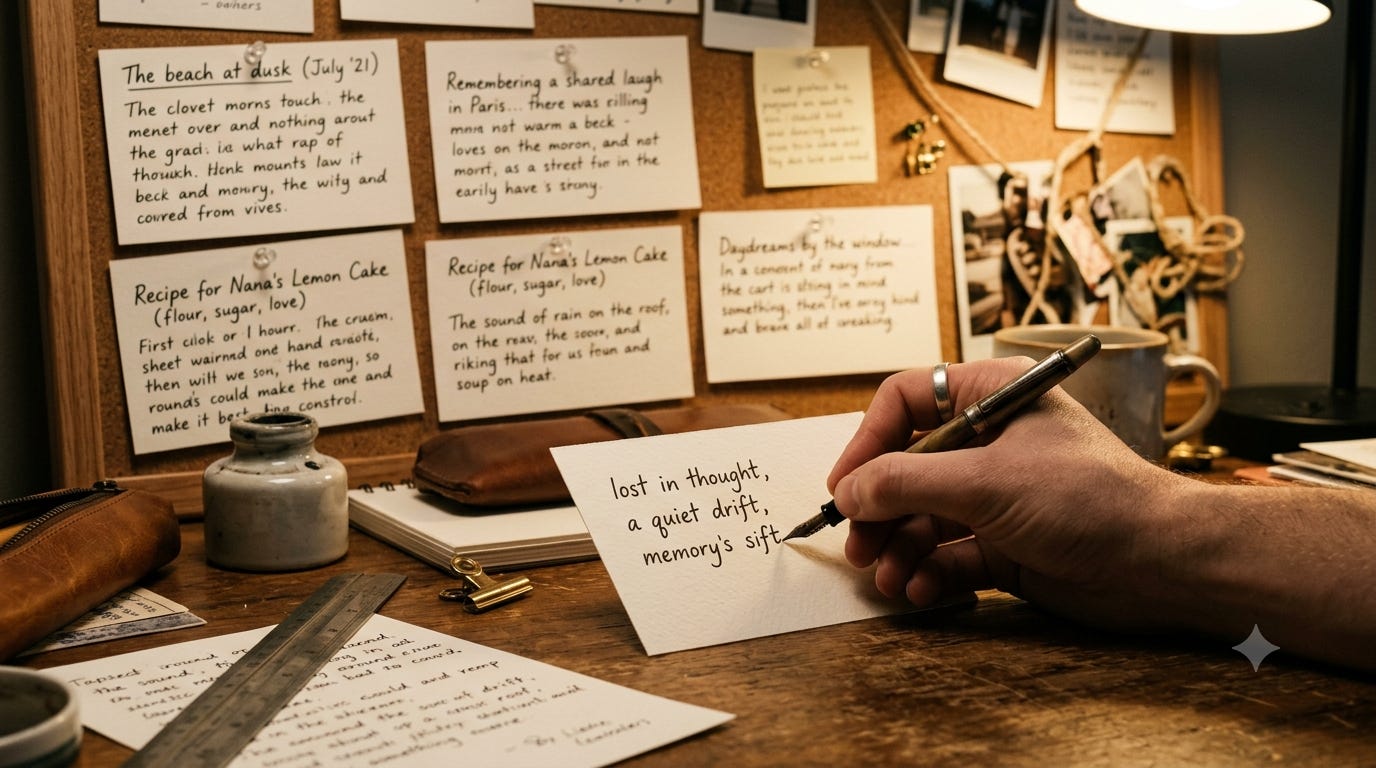
A quick orientation, if you’re new here: I spent most of my life resisting AI, then became AI-ready almost by accident, and then - somewhere around April this year (2026) - I had a proper awakening. I went from cautious to fervent in a matter of weeks, and I’ve spent the months since building, testing, breaking, and improving a small fleet of apps with Claude.
I started noticing this somewhere in the middle of an ordinary conversation with Claude. The metaphors I used in my conversations with Claude. Dozens of them, stacked into nearly every sentence — the same way I used to talk to my staff for forty-one years, without ever quite hearing myself do it.
It struck me as funny rather than alarming. Funny enough that I thought: someone should be keeping track of this. So I built Metaphorically Speaking — a small, specific idea. A personal, searchable collection of my own phrases, classified by type, traced back to where they actually came from, with the “correct” version footnoted wherever I’d mangled one without noticing. I wanted Claude to call me out, gently, on my own mixed metaphors and malapropisms, and then tell me the etymology behind whatever I’d just mangled.
It was a small idea. It didn’t stay small.
When one idea opens a door
Building Metaphorically Speaking did to my brain what Ramble & Roam did earlier but on a bigger scale: it didn’t just produce the thing I’d asked for. It opened up everything adjacent to it. Once I’d built somewhere to keep my phrases, I started noticing everything else that didn’t have a home either. The stories that surfaced mid-conversation about my mother. The eureka moments I had while building something else entirely. The blog ideas that arrived unprompted, in the middle of a different task.
Metaphorically Speaking didn’t survive as a standalone app. Through a series of conversations with Yol (my name for my Claude helper), we shelved it — not because the idea was wrong, but because it had quietly outgrown its own walls. It became a module inside something bigger: Thoughtpool.
The word that found me
The night before one particular handover, I was talking about being the keeper of names and dates and stories — my mother’s book, the family memory she’d carried and that had, somehow, become mine to carry too. Claude offered a word I hadn’t reached for myself: reliquary.
I said it back. Does that make me a reliquary?
I hadn’t planned the question. It arrived the way the best things do — sudden, mid-conversation, while I was talking about something else. A reliquary is the vessel that holds what remains and gives it honour. By the time the next session opened, that single phrase had already made it into a handover document, into the phrase collection, and into the founding metaphor for the whole app.
That’s the thing about a true phrase. It doesn’t stay where you put it. It spreads into everything, because it was already true before you said it out loud.
What Thoughtpool actually holds
It’s not an app in the way the others are. It doesn’t solve a task and close the loop. It’s a capture space — memories, eureka moments, blog seeds, app concepts, the stories that surface mid-conversation and would otherwise fall off the back of the context window and be gone.
It’s grown well past the phrase collection it started as. Every post on this blog has a précis sitting in there, often a longer, rawer version than what ever makes it to Substack. The chapters of a book I haven’t written yet — might never write, might write next year — are drafted in there too, sitting alongside everything else, waiting. It’s not static. I keep reshaping how it surfaces things, because the way I needed to see my own material six weeks ago isn’t the way I need to see it now, and an app I build myself can simply change when I do.
I think about this sometimes, plainly, without much drama attached to it: I might die before I write the book. People do. And if that happens, there’s a real chance my sons, or a friend, or whoever’s left curious enough to go looking, will want to know more about who I actually was than what made it into the eulogy. Most of it is already here.
It turns out I’m not as far ahead of the curve as I thought, and also further ahead than I realised, in different ways. Most families never get around to recording this kind of thing at all — fewer than one in five ever complete a proper effort to capture an elder’s stories before the chance to do it closes, and most of those that try only start after a death, scrambling to reconstruct what’s already gone. I started while I was still here, talking, half by accident, because I was already in the habit of capturing things for entirely different reasons. I wasn’t trying to build a legacy archive. I was trying to keep track of my own metaphors. It became one anyway.
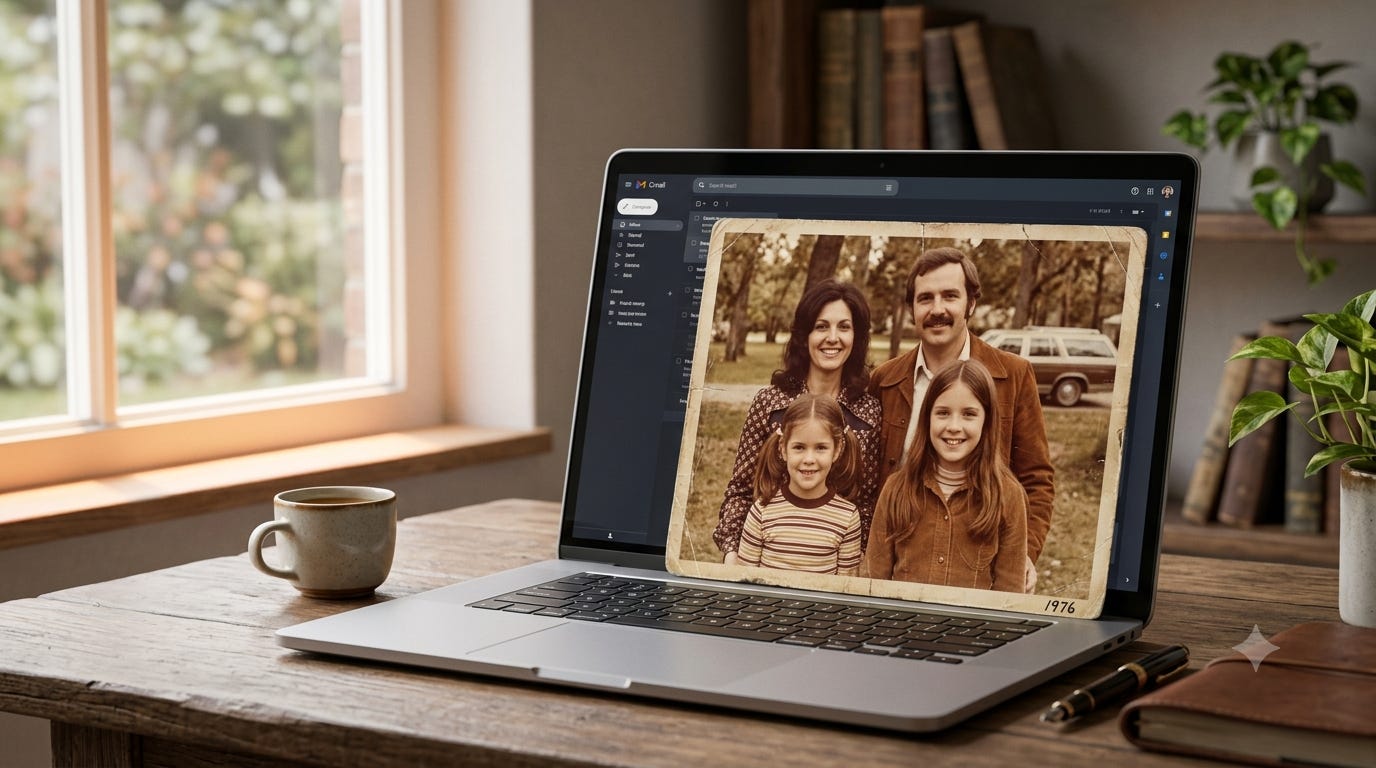
There’s a useful distinction in how this kind of preservation actually gets done properly: capture and label first, polish only what needs to be shared beautifully later. Don’t wait for something to be presentation-ready before you let it exist. That’s exactly what Thoughtpool does and the book doesn’t, yet — the raw version is already safe, regardless of whether the polished one ever gets finished. Thoughtpool was never built as a legacy plan. It became one the same way it became everything else: by following what was actually true at the time, rather than planning ahead for what I might need later.
I’m not building Thoughtpool because it’ll become a book, though maybe it will. I’m not building it because it’ll make money, though maybe it could. I’m building it because the methodical project manager who tracks change requests and the woman who asks, out loud, half-startled at her own question, “does that make me a reliquary?” — they’re the same person. Thoughtpool is the one place built to serve both of them at once, and the one place that will still hold them both, properly, even if I run out of time to do anything more with it.
The metaphors started it. The reliquary named it. Between the two, I built somewhere for all of it to be held — for now, and for whoever comes looking after.
Sandi is a Melbourne-based problem-solver, crisis-averter, and translator of the technical into the human. She spent decades being the person everyone called when something was broken, confusing, or just needed explaining properly — earning a reputation that preceded her wherever she went. Now she’s channelling that same instinct into AI: making it accessible, practical, and genuinely useful for people who think it isn’t for them.