

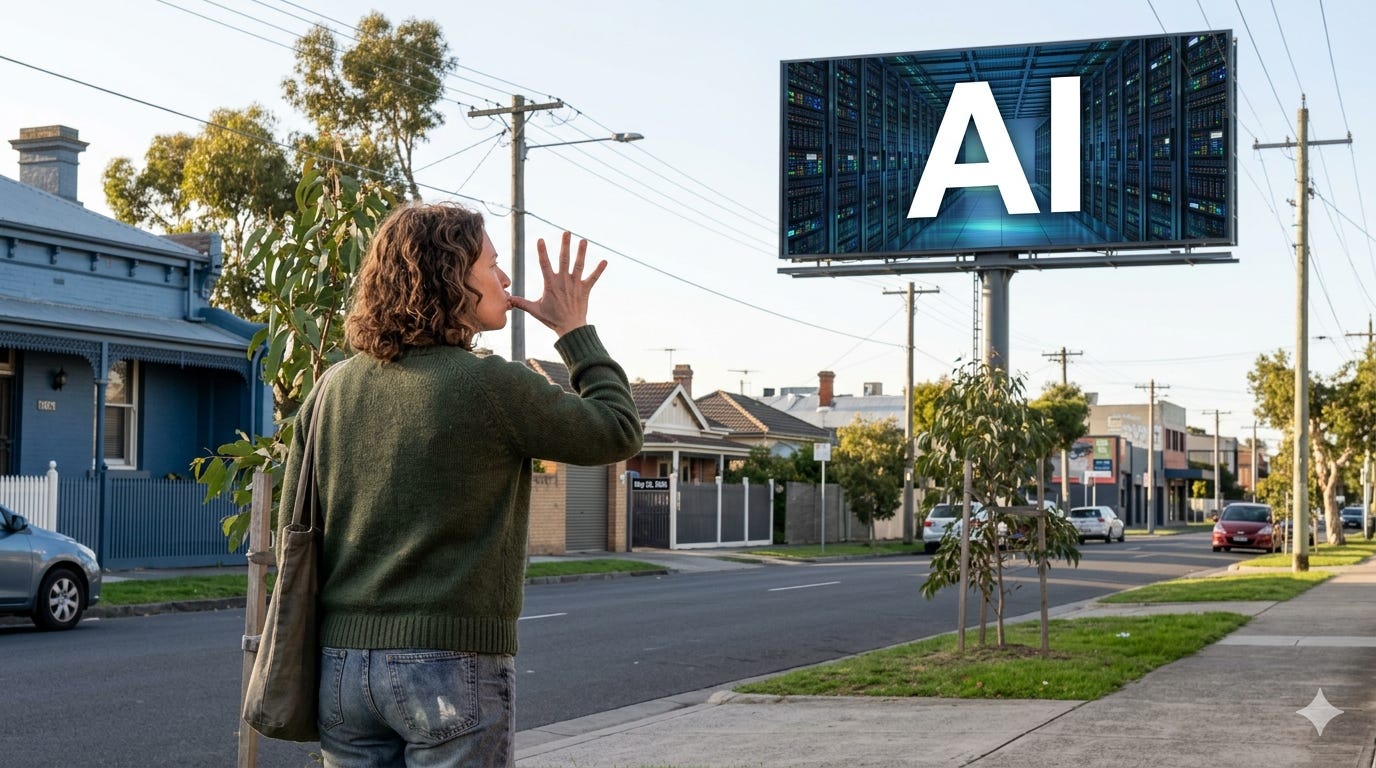
The dog next door barks all day when the owners go out.
It has been doing this for three years.
I know people for whom that kind of noise becomes a slow accumulation — an irritation that picks away, day after day, until something disproportionate builds up in the place where patience used to be. They don’t decide to get angry. It just arrives, volcanic and foul-worded and completely out of scale with a dog that is, after all, just being a dog.
The dog isn’t doing anything wrong. It’s anxious. It’s alone. It’s doing the only thing it knows how to do with that feeling.
There was never any point yelling at it.
But here’s the thing I keep thinking about: the volcano didn’t have to happen either. There were moments — early moments, three years ago moments — when the same person could have caught themselves mid-irritation and asked a different question. Not why won’t this dog shut up but why is this dog barking? Not this is ruining my day but what is actually happening here?
Curiosity instead of reaction. A small pivot. Taken early enough, it changes everything.
The wall I can see going up
I’ve been telling people lately that I do a bit of work with AI.
The responses are fascinating, if you can detach enough to watch them properly. There’s a particular face — and if you’ve seen it you’ll know exactly what I mean — where something closes. Not rudely. Not consciously, even. But visibly. The eyes do a thing. The shoulders do a thing. A wall goes up between us before another word has left either of our mouths.
I have, apparently, green skin and seven horns.
What I find interesting — genuinely interesting, not judgmentally interesting — is how fast it happens. There’s no information in the room yet. I haven’t said what I do with AI, or why, or what I’ve found. The word alone is enough. The reaction precedes the conversation entirely.
I recognise it because I’ve done it myself. About other things. The reflexive withdrawal before the evidence arrives. The decision made in the amygdala before the prefrontal cortex has finished reading the sentence.
It’s not stupidity. It’s not even stubbornness. It’s just what happens when a stimulus arrives faster than the habit of curiosity can interrupt it.
The man at JB Hi-Fi
Recently I was in JB Hi-Fi, looking at laptops. There was a deal — a significant one — and I wanted to know more. A staff member came over, the kind of twenty-something who clearly lives closer to this technology than most of my dinner party companions, and asked what I wanted to use the machine for.
I said: “AI.”
He nodded. Reached for the price list.
No gaping maw. No wide eyes. No visible recalibration of who I was or what I represented. Just a quiet, matter-of-fact acceptance of a logical use case for a capable machine.
I was gobsmacked.
Not because his response was remarkable. Because it wasn’t. Because in his world, apparently, someone walking into a tech store and saying “AI” is as unremarkable as someone saying “video editing” or “architecture” or “working from home.” It’s just a thing people do. With computers. In 2026.
The wall never went up. There was nothing to yell at. There was just a conversation, and then a price list, and then a very pleasant discussion about RAM.
That is what it looks like when someone has already done the work of not yelling at the dog.
What the catching looks like
I want to be careful here not to make this sound easy, because it isn’t always.
The moment between stimulus and response is genuinely small. Blink and it’s gone. And we don’t always blink in time — I certainly don’t. There are topics that bypass my curiosity entirely and go straight to the wall, and I’m under no illusion that AI is one of them for a lot of people I care about.
But the catching — when it happens — looks something like this:
You notice the reaction starting. The shoulders, the eyes, the closing. And instead of following it, you get quizzical. You ask why am I reacting this way? Not as an accusation. As genuine inquiry.
Why does the word AI make me feel like this?
Maybe the answer is: because of forty years of films that told me it would destroy everything. Maybe it’s: because I tried it once and felt foolish. Maybe it’s: because I’m worried about my job, or my relevance, or whether this is a world I’ll recognise in ten years.
All of those are real answers. All of them deserve to be taken seriously.
But you can only get to them if you catch yourself first. If you pause long enough to be curious about your own reaction before the reaction becomes the whole story.
The dog was always going to bark
Here’s what I’ve come to believe, three years into listening to the dog next door:
The barking isn’t personal. It was never personal. The dog has no opinion about me, no agenda, no awareness that I exist. It’s just responding to its situation with the only tool it has.

Most of the things that trigger the wall response are the same. The word AI isn’t targeted at you. The technology isn’t asking you to feel threatened. The conversation isn’t designed to make you feel behind.
It’s just a thing, doing what it does, in a world that’s moving whether or not we’ve decided how we feel about it yet.
The question is never really about the dog.
It’s about what you do with the three seconds between the bark and the response. Whether you let the volcano build, one small irritation at a time, until something disproportionate arrives. Or whether you get curious — early, gently, before the habit of reaction has had time to settle in.
Curiosity doesn’t require bravery. It just requires a moment’s pause.
And in that pause, if you’re quiet enough, you might find that the thing you were about to yell at is just anxious, and alone, and doing the only thing it knows how to do.
Which is, when you think about it, not so different from the rest of us.
Sandi is a Melbourne-based problem-solver, crisis-averter, and translator of the technical into the human. She spent decades being the person everyone called when something was broken, confusing, or just needed explaining properly — earning a reputation that preceded her wherever she went. Now she’s channelling that same instinct into AI: making it accessible, practical, and genuinely useful for people who think it isn’t for them.
It is so fast! I think we lack the training to pause before reacting. Maybe that's something that should be taught in schools, alongside the power of compounding interest and how to do your taxes.
Love it Sandi, if we could expand that moment between the ‘bark’ and the response I believe miracles could happen!