

I was watching Oprah interview Dario Amodei last month.
Dario is the CEO of Anthropic — the company that makes Claude, the AI I use every day, the one I’ve been writing about in this series. He was sitting across from Oprah, calm and measured, saying something that stopped me mid-scroll.
Most people, he said, view AI negatively.
I put my cup down.
Not because it surprised me. Because I’ve been watching it happen from the inside — in conversations, in the comments, in the particular face people make when I mention what I do — and I’ve been trying to put my finger on exactly why. Why the negativity. Why the resistance. Why intelligent, capable people who would benefit enormously from these tools have decided, with some conviction, that AI is not for them.
And sitting there watching Dario say it out loud, on Oprah, to an audience of millions — I think I finally understand what’s underneath it.
The train
Here’s the image I keep coming back to.
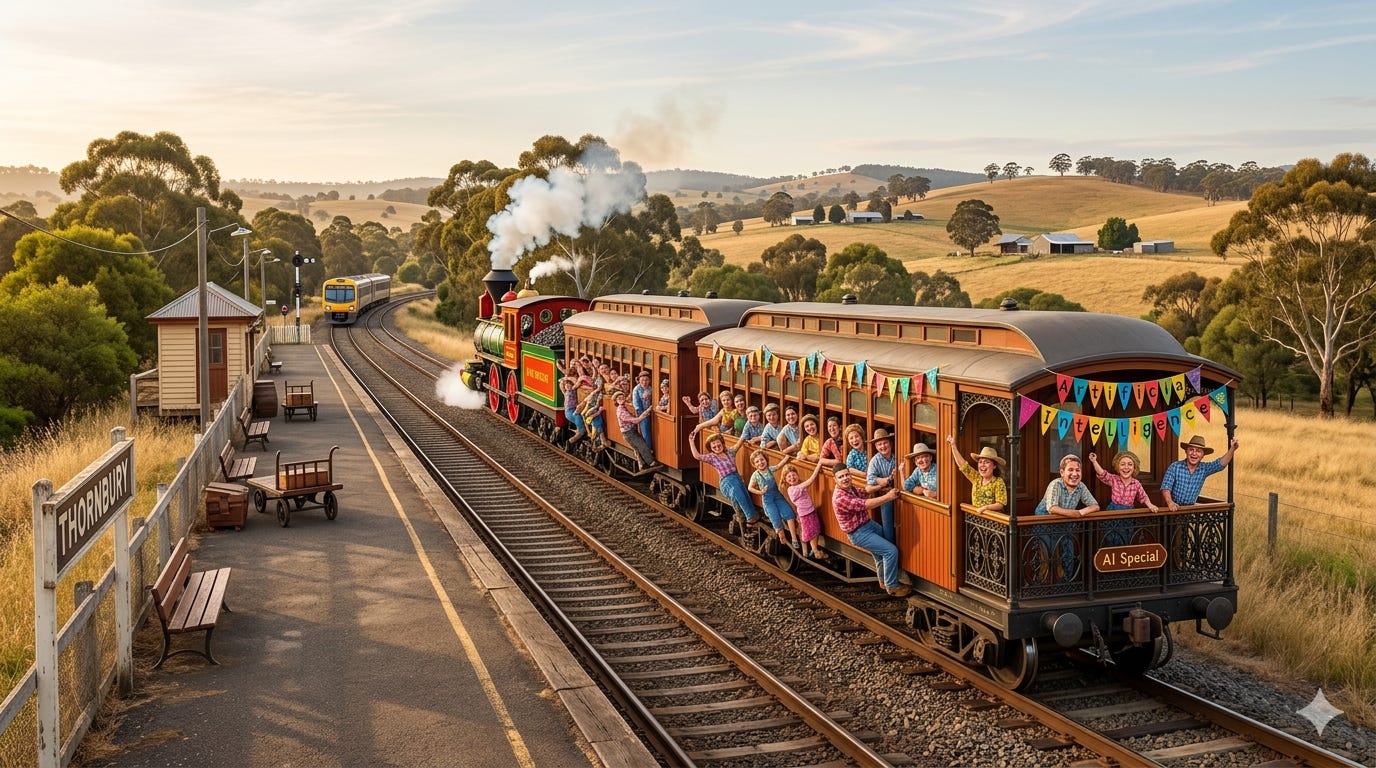
Imagine a train. Not a metaphorical train — a real one, the kind with a departure time and a platform number and a crowd of people who knew about it in advance and got there early and got on.
You weren’t on it.
Maybe you heard about it as it whistled past. Maybe you read about it days later, or months later, or years later. Maybe someone told you about it at a dinner party and you nodded and said “yes, I’ve been meaning to look into that” and then didn’t. Maybe you tried to board once, got something confusing back, and concluded the doors weren’t for you.
And then one day you looked up and the train was gone, and everyone else seemed to be on it, and you were still standing on the platform.
That moment — the moment you realised you were late — is the moment everything changed.
What happens in that moment
Here’s the thing about being late that nobody talks about.
Being late feels like being wrong. And most of us, given the choice between admitting we were wrong and finding a reason why we were actually right all along — will find the reason.
It happens fast. Faster than conscious thought. The mind reaches for justification before the feeling has even fully landed.
I didn’t miss anything important. The technology isn’t ready. It’s overhyped.
It’s dangerous. It’s not for people like me. The people using it are sheep.
I have real skills that can’t be replaced by a machine.
I choose not to engage with something I find ethically troubling.
Some of those justifications have real merit. The ethical questions are genuine. The hype is real. The risks deserve serious attention.
But here’s what I notice: the people making these arguments most loudly are very often the ones who feel most left behind. The conviction tends to be loudest in the people who are furthest from the platform.
The negativity isn’t really about AI.
It’s about the unbearable feeling of being late — and the very human instinct to make that feeling someone else’s fault.
What Dario was actually saying
When Dario said most people view AI negatively, he wasn’t talking about the researchers and the ethicists and the policy makers. He was talking about the person at the dinner party. The colleague who changes the subject. The friend who says “I don’t trust it” without having tried it.
He was talking about your people. My people. The ones this blog is for.
And what he said next is the part that matters: we need to find a way for everyone to be an active participant in what is happening.
Not a passive recipient. Not a bystander watching from the platform. An active participant.
That’s not a technical challenge. It’s a human one. It’s the challenge of helping people step off the platform and onto the train — not because they have to, but because they finally understand that the train was always going somewhere they wanted to go.
You weren’t wrong to wait
I want to say something carefully here, because I mean it.
The wariness wasn’t stupid. The resistance wasn’t irrational. The people who looked at the hype and the headlines and the breathless enthusiasm and said “I’m not sure about this” — they were responding sensibly to genuinely mixed signals.
You weren’t wrong to wait. You were just protecting yourself in the way that felt safest at the time.
But there’s a difference between protection and exile. Between taking your time and deciding the train was never worth boarding. Between healthy scepticism and a position that hardens, over time, into something that starts to look like fear wearing the clothes of principle.
Dario Amodei can see that from where he sits. I can see it from where I sit.
And I think, if you’re honest with yourself, you might be able to see it too.
The train hasn’t left
Here’s what I want you to know.
You are not as late as you think.
The people who got on in 2022 had an experience. You’re going to have a different one — better, in many ways, because the tools are more capable now and you’re arriving with actual questions rather than novelty. You’re not catching up. You’re just starting from where you are, which is the only place anyone ever starts.
The negativity — whatever form it takes in you — is not a character flaw. It’s a very human response to a very disorienting moment in history. Dario Amodei, sitting with Oprah, acknowledged that. He’s not dismissing it. Neither am I.
But I am asking you to look at it honestly.
Is the position you’re holding about AI actually about AI? Or is it about the platform, and the train, and the moment you realised you’d missed it — and the story you told yourself to make that feel okay?
Because if it’s the second thing — and I think for a lot of people it is — then the good news is that the story can change.
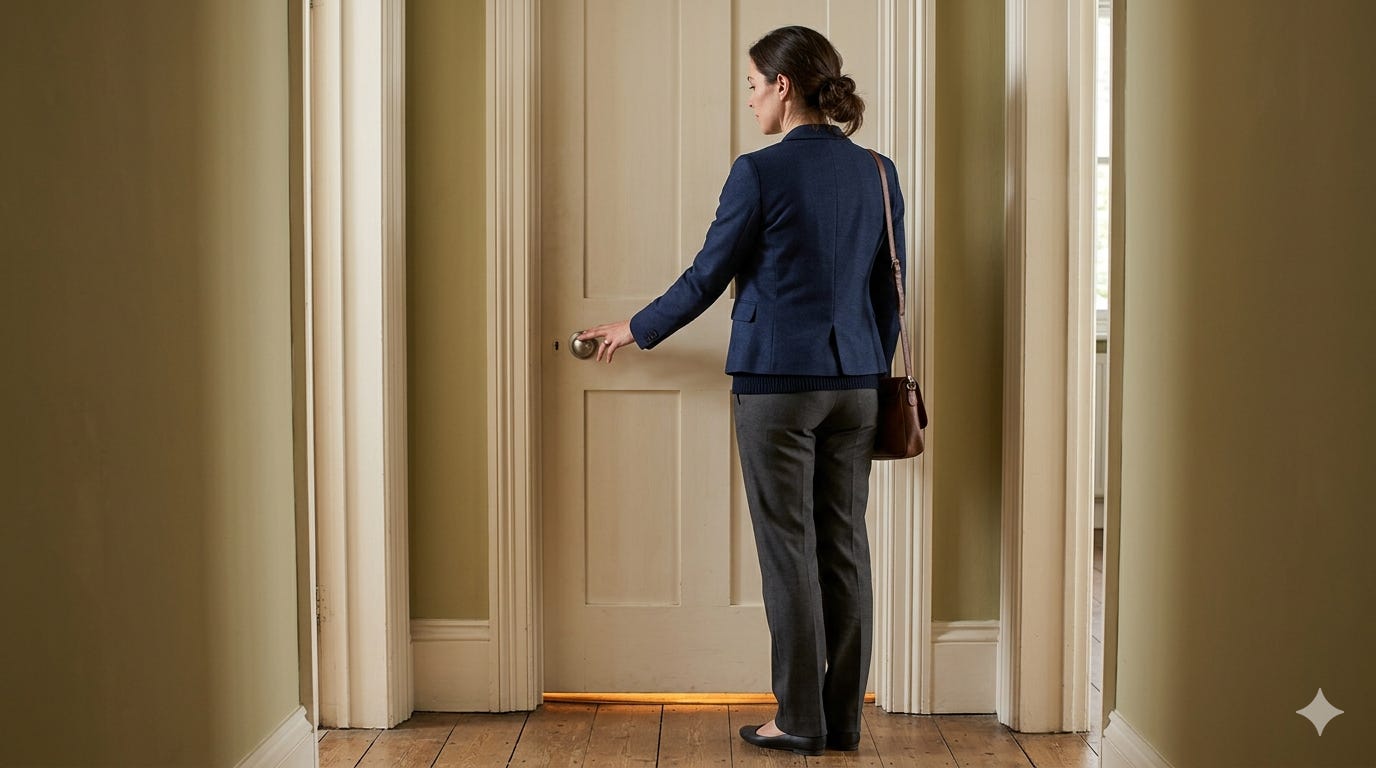
The conversation is still open. The door is still there.
It opens from the inside.
Sandi is a Melbourne-based problem-solver, crisis-averter, and translator of the technical into the human. She spent decades being the person everyone called when something was broken, confusing, or just needed explaining properly — earning a reputation that preceded her wherever she went. Now she’s channelling that same instinct into AI: making it accessible, practical, and genuinely useful for people who think it isn’t for them.