

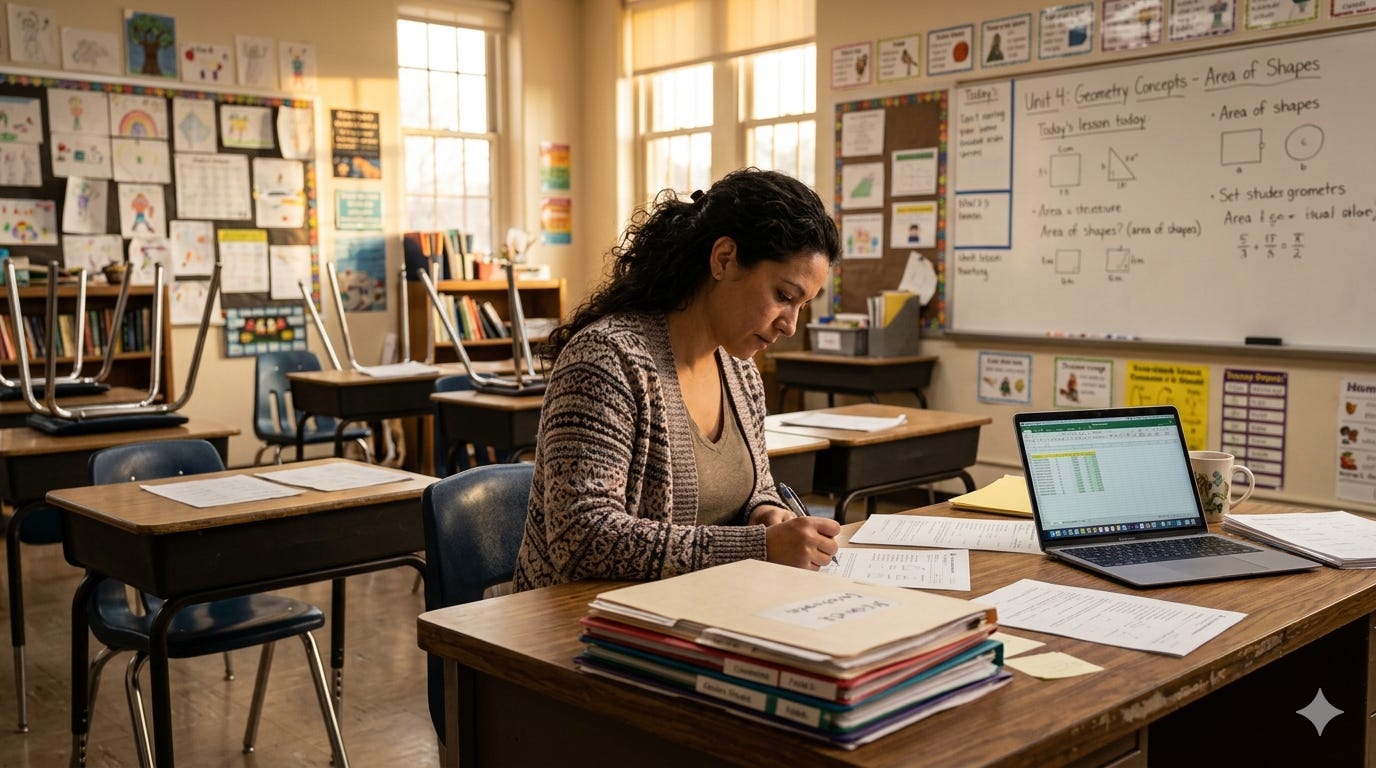
I was at a scrapbooking workshop on a Saturday in May.
If that sentence surprised you, good. Hold that surprise. It’s going to be useful in a moment.
The woman sitting next to me was a Principal. Early fifties, well-educated, well-spoken — the kind of person who commands a room without trying to. She runs a large school in a large regional town, which means she is responsible for hundreds of students, dozens of teachers, and the particular administrative weight of an institution that the Education Department expects to run like a machine while funding it like a suggestion.
We were cutting and sticking. And she was talking.
Not complaining, exactly. More like the particular resigned fluency of someone who has made peace with a situation they wish were different. The admin. The reporting. The documentation that arrives in waves, each one slightly larger than the last. The hours that should go to teachers — to the mentoring, the development, the work of making good educators better — eaten instead by forms and systems and the bureaucratic appetite that never quite gets full.
She rolled her eyes. Shook her head. Said something about wishing the Department would do something about it.
Then she picked up her custom cutting system and moved on.
I know that gesture. I’ve made it myself approximately ten thousand times across 41.5 years of being the person who creates the fix, builds the database, trains the crew, and gets by with what she’s given. The resigned acceptance of someone who has long since understood that nobody is coming to solve it for them.
But I wasn’t resigned. I was sitting there with something she didn’t have yet.
What I’d just built
Three weeks earlier, I had built DayCompass.
DayCompass is an app I made for myself — not a developer, not a tech person in any traditional sense, just someone who had found that existing tools for managing daily life didn’t work for the way my brain works. So I built one that did. With AI. In an afternoon.
I won’t overstate what that felt like, because I’ve tried and the words keep coming out wrong. What I’ll say is this: when a tool is built for the specific way your particular mind operates, it doesn’t feel like using software. It feels like thinking more clearly than you have in years.
I wanted that for her.
Not DayCompass — that’s mine, shaped around my particular chaos. But something shaped around hers. A tool that could hold the administrivia. That could draft the communications, generate the templates, organise the reporting, do the things that were eating her hours — so she could get back to the room where the actual work happens.
The room with the teachers in it. The conversations that actually matter.
The face I made
Here’s the part I need to tell you carefully, because it matters.
I asked her whether she used AI in her daily work.
She looked at me with polite bewilderment. Not defensively. Just — no. AI hadn’t entered her daily life yet. Not in any meaningful way. Not in the way that would help with any of the things she’d just spent twenty minutes describing.
I looked at her the way people look at me when I mention what I do.
Green skin. Seven horns.
Because I was sitting next to a highly educated, deeply capable, genuinely passionate woman who was running a large school with real skill and real commitment — and she was doing it without the thing that had just changed everything for me. Not because she’d chosen not to. Because nobody had shown her that it was there, and what it could do, and that she was exactly the kind of person it was built for.
She wasn’t resistant. She was just — outside the conversation. The way most people are. The way this blog is written for.
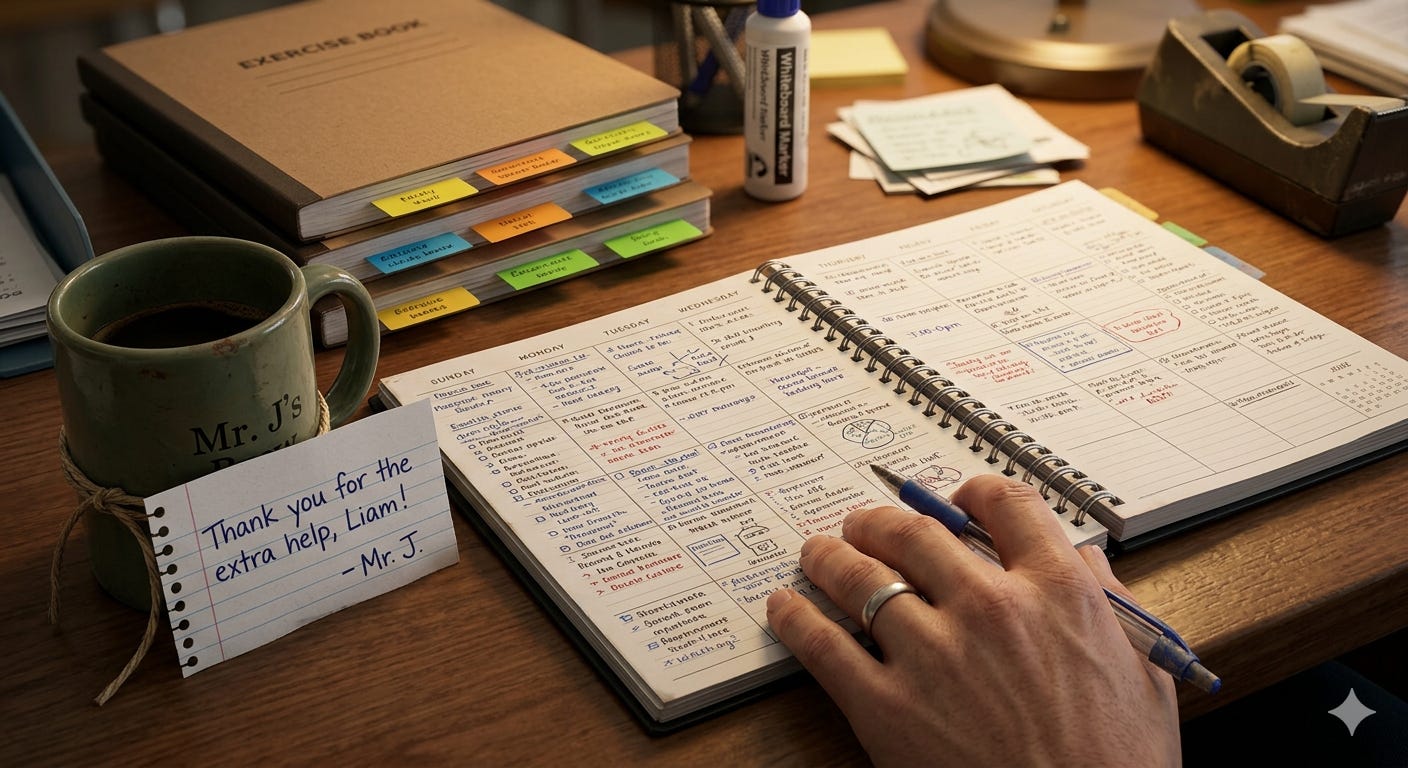
The drive home
I thought about her all the way home.
About what I could build for her. About the other Principals. The other teachers. The other people doing important, skilled, human work while drowning in the administrative weight of doing it inside an institution.
And somewhere on that drive — on a Saturday afternoon in May, three weeks ago — the thought arrived that became this blog.
Not: I will build an app for Principals. Though that thought arrived too, and it has a name now, and it will have its own post eventually.
The bigger thought. The one that landed first.
There are so many people like her. People who are capable and busy and completely outside this conversation. Not because they don’t want to be in it. Because nobody has walked up to them at a scrapbooking workshop and said: here. This is for you. It works.
That’s what I’m trying to do here.
One post at a time.
Sandi is a Melbourne-based problem-solver, crisis-averter, and translator of the technical into the human. She spent decades being the person everyone called when something was broken, confusing, or just needed explaining properly — earning a reputation that preceded her wherever she went. Now she’s channelling that same instinct into AI: making it accessible, practical, and genuinely useful for people who think it isn’t for them.