

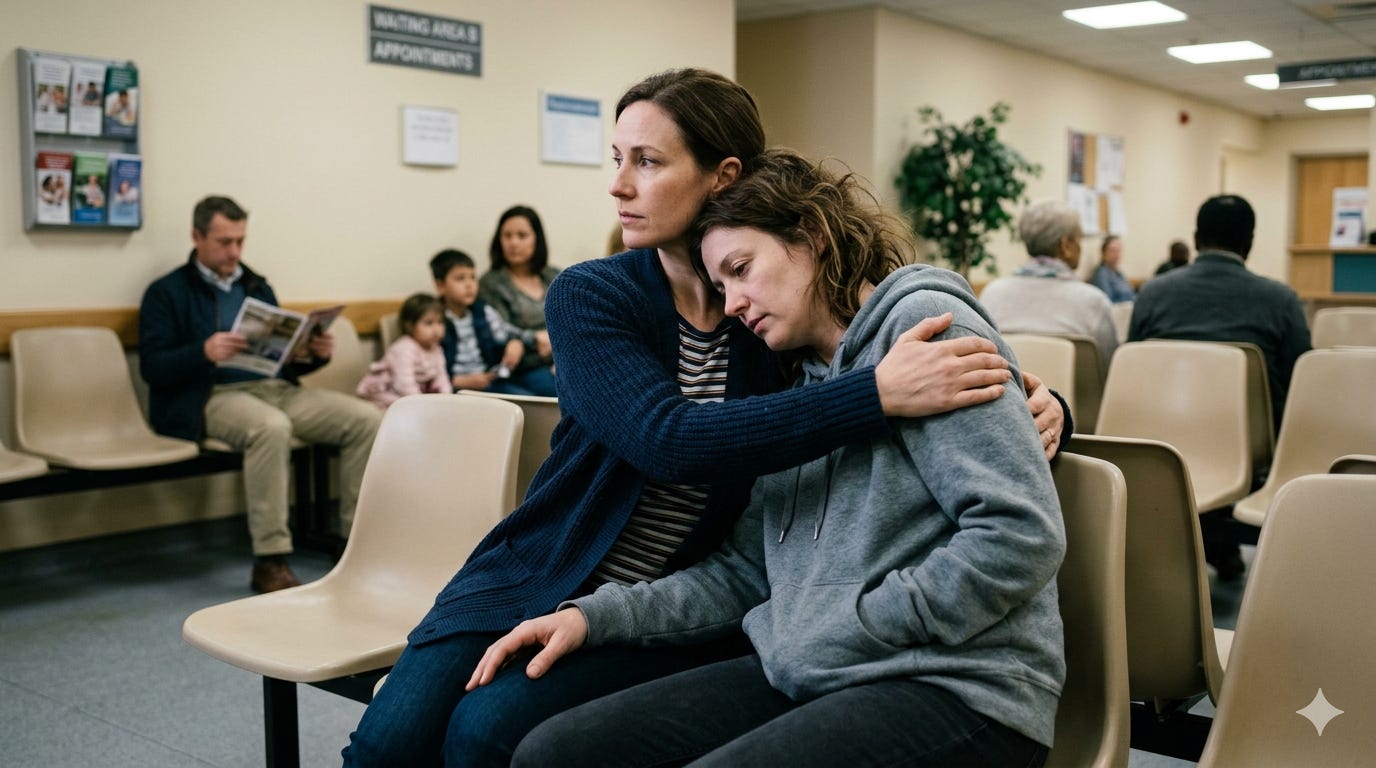
She got the call on a Tuesday.
Her sister’s voice was steady — the particular steadiness of someone who has just received news and hasn’t yet decided how to feel about it. A diagnosis. The name of something that was now living in her sister’s body, that had a medical term and a treatment pathway and a prognosis that the doctor had explained in language that had washed over both of them like a tide coming in too fast to read.
She wrote down the word. She couldn’t spell it. She wasn’t sure she’d heard it correctly.
She said: I’m coming over.
And then she sat in her car in the car park of wherever she was when the call came, and she thought: what do I actually do now?
The gap between caring and knowing
Here is the thing nobody tells you about loving someone through a health crisis.
Caring is not the same as knowing. And knowing is what helps.
She would do anything for her sister. That part was simple — the love was not in question, had never been in question, would never be in question. But love, on its own, doesn’t know what empyema means. Love doesn’t know which questions to ask at the oncology appointment, or what the difference is between a Stage 2 and a Stage 3 diagnosis, or why the doctor mentioned a particular specialist in a particular tone of voice that felt significant, but she couldn’t explain why.
Love shows up. But showing up without the knowledge can feel, some days, like not quite enough.
She had grown up in a family without doctors in it. No medical background, no professional frame of reference, no cousin who could be texted at midnight with the question she was too embarrassed to ask the actual medical team. Just her, and her sister, and a diagnosis she couldn’t spell, and the particular helplessness of wanting to do something useful and not knowing what useful looked like.
What she did in the car park
She typed the word into her phone. Her best guess at the spelling — close enough, it turned out, for the AI to understand what she meant.
What came back was not a medical consultation. It was not a diagnosis or a treatment recommendation or anything that replaced the team of professionals who were, at that moment, already doing their jobs with skill and care.
It was a plain language explanation of what the word meant. What the diagnosis involved. What the treatment pathway typically looked like, and what questions were worth asking at the first appointment. What the staging meant. What the specialist the doctor had mentioned did, specifically, and why that referral might have been made.
She sat in the car park for forty minutes.
She came out knowing enough to ask the right questions. Not all of them — there were questions she wouldn’t know to ask for months yet, questions that only arrive after you’ve been living alongside something for long enough to understand its shape. But the first ones. The ones that would tell her sister: I looked it up. I came prepared. I am not going to make you explain everything from the beginning every time we talk, because I already know the beginning.
That is its own form of love.
The family with a doctor in it
I want to name something that doesn’t get named enough.
In a health crisis, information is power. And it has always been unevenly distributed.
The family with a doctor in it — a GP cousin, a nurse sister, a friend from medical school — asks different questions than the family without. They know which results to ask for. They know when the answer they’ve been given is incomplete. They know the difference between a wait-and-see and an act-now, even when both are delivered in the same measured tone.
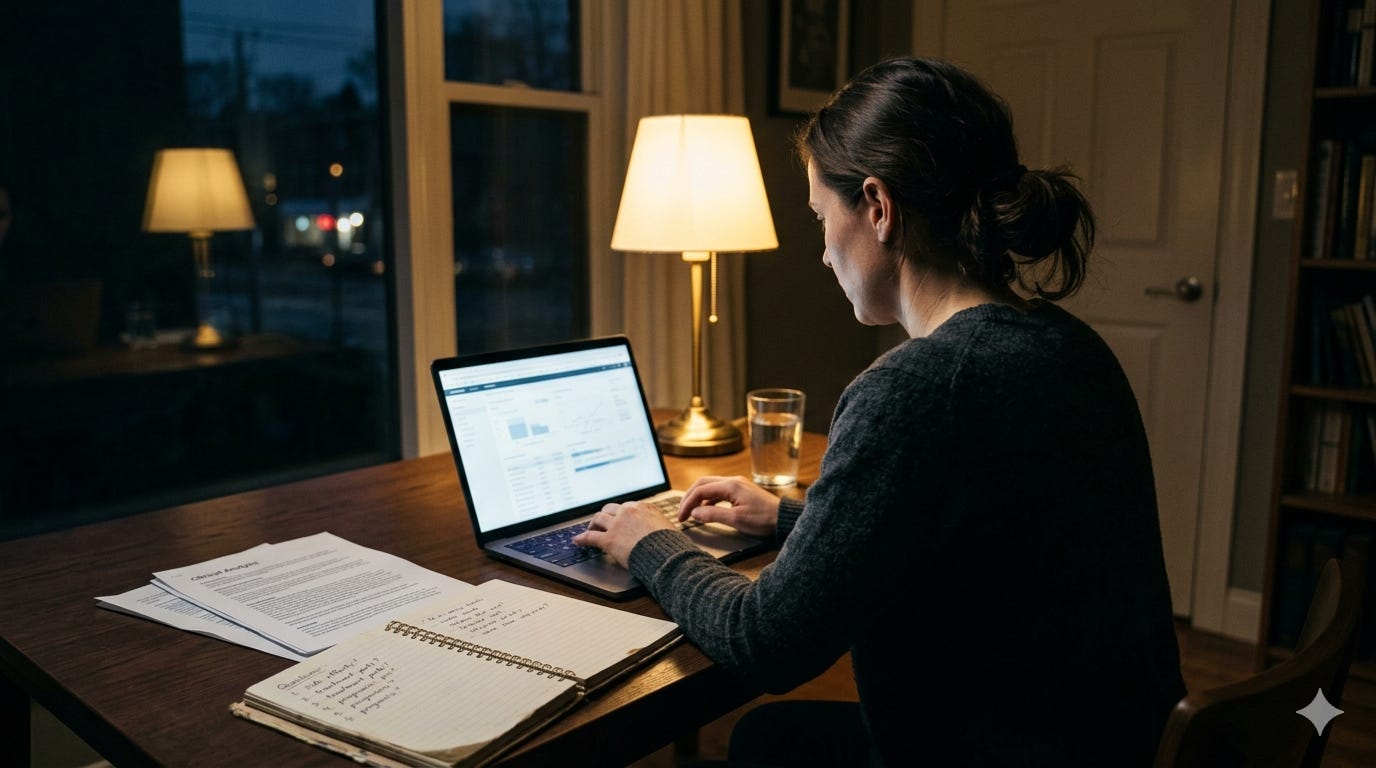
The family without a doctor in it relies on what they can find, and what they can understand, and how brave they feel about asking questions that might reveal how little they know.
AI doesn’t give her a doctor in the family. It gives her access to the same quality of informed curiosity that used to require knowing the right people. The ability to walk into an appointment with questions that show she has done the work — not to impress anyone, but because her sister deserves an advocate who has done the work.
She still can’t fix it. No amount of research changes the diagnosis or speeds the treatment or removes the fear that arrives at 3am when everything is quiet and the love has nowhere useful to go.
But she can show up informed.
And showing up informed, it turns out, is something her sister can feel. The difference between the visitor who arrives and needs to be managed, and the one who arrives and can be leaned on. The one who asks the question the patient forgot to ask. The one who remembers what the doctor said when the patient was too frightened to retain it.
That’s not a medical skill.
It’s just love, equipped.
Sandi is a Melbourne-based problem-solver, crisis-averter, and translator of the technical into the human. She spent decades being the person everyone called when something was broken, confusing, or just needed explaining properly — earning a reputation that preceded her wherever she went. Now she’s channelling that same instinct into AI: making it accessible, practical, and genuinely useful for people who think it isn’t for them.