


There’s a pattern that ran quietly through my career, and it wasn’t the heroic version I sometimes imply. I didn’t build everything. Management introduced plenty of tools over the years — Word, PowerPoint, Excel, SharePoint, ServiceNow, MS Project, Access, Copilot, and before all of that, Symphony, WordPerfect, Quattro Pro, dBASE, Lotus 1-2-3. Some ancient IT-made tools from the ‘80s.
The truth is simpler, quieter, and more accurate:
When something essential didn’t exist — and the work couldn’t move without it — I built the missing piece.
Not because I wanted ownership.
Because the job needed doing.
I feel my generation inherited the baby-boomer’s attitude toward getting things done. You just did it. If the thing didn’t exist, you invented it. It’s a thread that ran through my whole life.
I’m telling you this now, before the stories, because it’s the whole point: AI didn’t hand me a new skill. It handed the same old instinct a much faster way to act on itself.
The first tool I built because nobody else was going to
In 1998, I needed a database. A real one.
Something to store the guts of the work we were doing — the client answers, the logic, the decisions, the specifications.
The company didn’t have one.
Nobody was planning to build one.
Nobody even understood why we needed it.
So I opened MS Access and built AegeanC.
It wasn’t glamorous.
It wasn’t strategic.
It was simply necessary.
And people used it.
Quietly.
Every day.
The tool that grew while I was away
A few years later, while I was off on another project, a colleague built BluC — inspired by AegeanC, extending it, improving it. When I returned, we integrated the two. Over the years, others tinkered with them. Someone built a front-end database. Someone else added automation around 2014.
It was never “my system.”
It was a living thing — shaped by many hands, across many years.
But the bones were familiar.
The logic was familiar.
The purpose was familiar.
And that mattered.
The moment everything changed: MedC.
By 2019, the IT team who used the database daily were exhausted by its slowness. One brilliant man reached out to a colleague in WA — a wizard with Oracle APEX — and together they rebuilt the entire thing into a single, elegant system.
That system became MedC in 2020.
It was fast.
It was modern.
It was everything the old databases had been trying to be.
And even though my career had taken me elsewhere again, I stayed connected to the team. When my project had quiet moments, I’d jump in and help improve MedC— working closely with our developer in WA.
His name was Ulysses, but with the accent, it sounded like “Yol.”
So Yol he became.
And Yol and I — we were unstoppable.
Not because we were special.
Because we were aligned.
I made the ideas.
He built them.
We iterated.
We refined.
We solved real problems for five local teams and five interstate teams who relied on MedC every day.
It was the best kind of collaboration — the kind where the work gets better because two people care enough to keep going.
The year of building before I left
When I learned in April that my tenure would likely end on September 30th, something in me clicked into gear.
Not panic.
Not grief.
Just clarity.
If I was leaving, the knowledge couldn’t leave with me.
So I got to work.
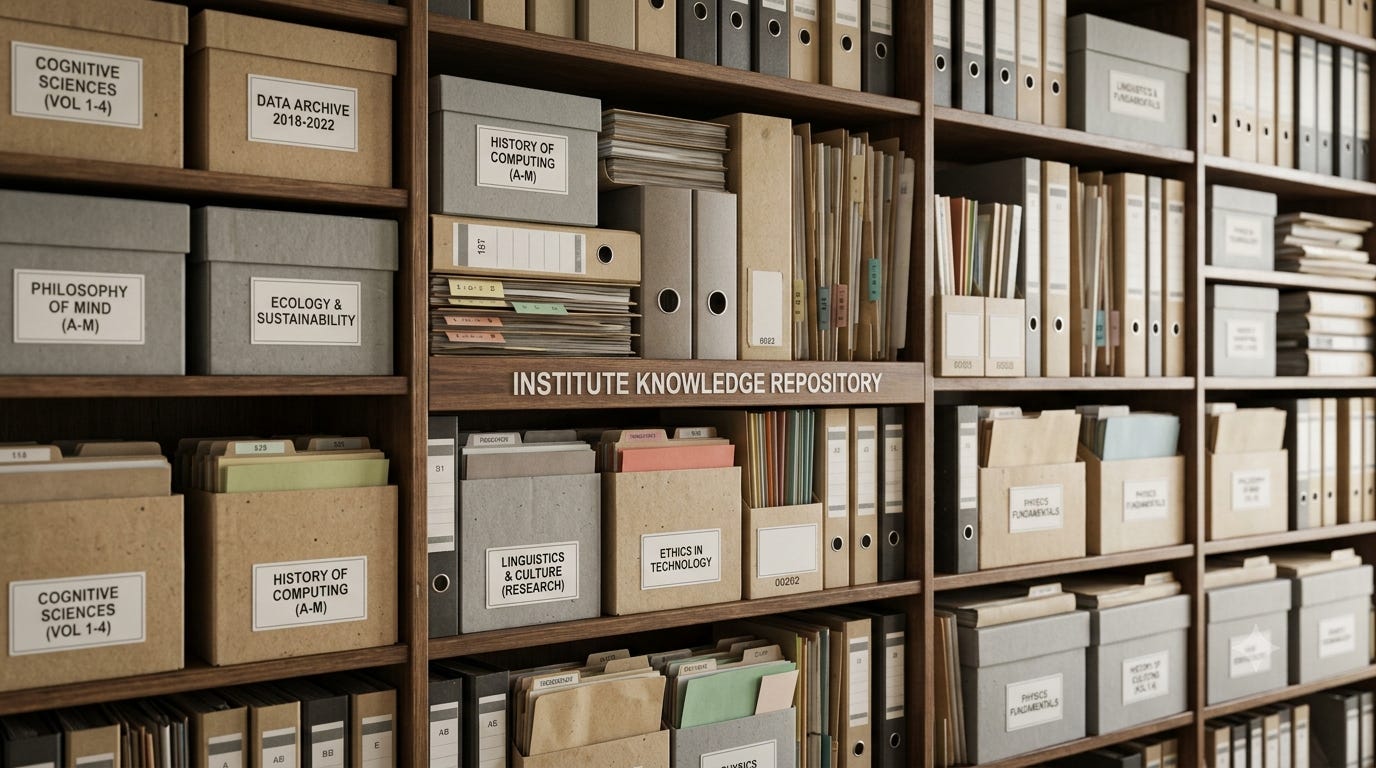
I defined major changes to the way MedC functioned — not for glory, but so the team would have what they needed long after I was gone. I wrote paper after paper. I built a knowledge library. I linked everything: Confluence articles, SharePoint documents, ServiceNow windows, every morsel of process and logic that still lived in my head.
I wasn’t building tools anymore. I was building continuity.
And Yol — patient, brilliant Yol — built everything I threw at him.
When I left in December, MedC was stronger, clearer, and more future-proof than it had ever been.
Not because of me alone. Because of the team. Because of the collaboration. Because of the years of shared effort.
The pattern I didn’t see until much later
So when my ex-staff member said, “AI hasn’t reached us yet,” I felt something old stir.
Not ego.
Not superiority.
Just recognition.
The same instinct that made me build AegeanC in 1998.
The same instinct that made me integrate BluC.
The same instinct that made me work with Yol on MedC.
The same instinct that made me write the knowledge library.
If the work needs something and it doesn’t exist yet, I build the missing piece.
Not because I’m the one who can.
But because I’ve spent a lifetime stepping into the gap between “what we have” and “what we need.”
And AI hasn’t reached them yet for the same reason none of those earlier tools arrived on their own, either. Someone has to walk through the gap first. It was never going to be the org chart. It was always going to be whoever was standing closest to the problem with the nerve to start.
The point of this story
This isn’t a story about being the hero.
It’s a story about being the person who notices the gap.
For me, the gap used to take months to close. A budget request. A developer in WA. A year of writing things down before I walked out the door in December.
Now the gap is an afternoon.
That’s not a small difference. That’s the whole shift this blog is trying to name — the same instinct I had in 1998, except now it doesn’t need Yol, or Access, or permission from anyone at all. It just needs me, a question, and the willingness to start before I feel ready.
I built AegeanC because nobody else was going to.
I’m still that person. The tools just finally caught up to the instinct.
Sandi is a Melbourne-based problem-solver, crisis-averter, and translator of the technical into the human. She spent decades being the person everyone called when something was broken, confusing, or just needed explaining properly — earning a reputation that preceded her wherever she went. Now she’s channelling that same instinct into AI: making it accessible, practical, and genuinely useful for people who think it isn’t for them.
You were always the cleverest in the room 😀