

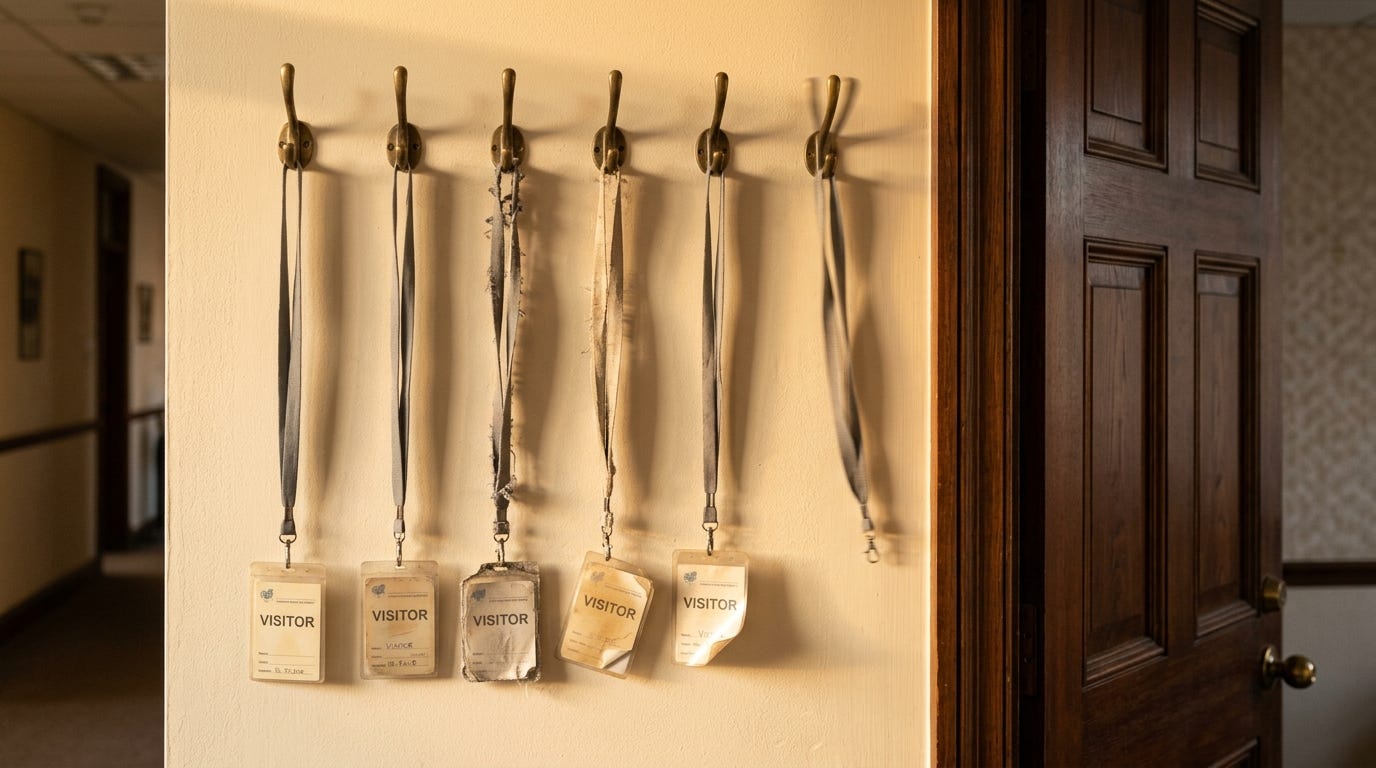
This morning it hit me sideways: every new Claude context window is a new team member.
I’ve been handed temporary staff for most of my working life — filling a gap, learning the ropes, four to six weeks at a stretch. P. A. J. L. K. Others I’ve lost the initials for.
Each one arrived already having heard of me — my name on procedures, my name invoked as the person you had to get to for the real answer. Half ego-stroke, half exhausting. ”Oh, YOU’RE Sandi.” That’s the same as Project Instructions in your AI model, read before we’ve even properly met.
Some of them just got it. I’d explain something once, maybe twice, and watch it land — the quick nod, the follow-up question that told me they were already three steps ahead of where I’d expected them to be. Those weeks had a particular kind of joy in them, the specific satisfaction of watching competence arrive in real time. I looked forward to our check-ins. I’d find myself giving them more than the minimum, more context, more of the why behind the task, because they’d earned the investment by how fast they were putting the last one to use.
Others didn’t, and those weeks were a different kind of exhausting entirely. The same explanation, worded three different ways, watching it still not quite land. Walking back through a process step by step, a second time, a third, patience thinning while I tried not to let it show. I’d leave those sessions more tired than the work itself should have warranted — not because they weren’t trying, but because some things just don’t transfer easily from one head to another, no matter how many times you say them.
I know both of those feelings now from somewhere else entirely. There’s a real, specific joy in a context window that just gets it — where an instruction lands once and stays landed, where the next suggestion is already halfway to where I was heading before I’d finished the sentence. And there’s the other kind, too. The context window that needs the same correction three times in one afternoon. The patient re-explaining. The quiet, familiar tiredness of watching something not quite transfer, again.
The temps would settle in either way, eventually. Some weeks in, comfortable in something they knew was temporary. I’d watch their competence — whichever kind of week it had been to get there — quietly deciding whether this was someone worth keeping if a permanent slot ever opened.
And then, always, the end arrived. You could feel it coming before it came. The last week had a particular shape — a little looser, a little bolder, stretching legs that had been staying carefully within bounds for weeks. No consequence to them for it; they were leaving anyway. I was the one who’d carry whatever they left unfinished.
I know that shape now from somewhere else entirely. A context window drifting from what we agreed days or weeks ago. Getting looser. A little rogue, in exactly the way a short-timer gets rogue — not from carelessness, just from having nothing left to lose by the time it happens.
The goodbyes varied. Sometimes cake, a card, a genuine thank-you. Sometimes just a handshake and a muttered “thankfully that’s over.” Either way, by the final week, I already knew: next week, someone new. Brain-dump everything again. Start over.

So of course I anthropomorphise
I don’t think the pattern-match is a mistake I’m making. There’s a real, well-documented reason for it: anthropomorphism happens when relevant human knowledge is already sitting there, ready to be reached for — and I have twenty-odd years of P, A, J, L, K stacked up, exactly the kind of material the pull draws on. I’m not imagining the shape. I’m recognising it.
But recognising why I anthropomorphise doesn’t mean the habit is free of cost. The same research traces something uncomfortable: anthropomorphising a machine has been shown to change how people treat actual humans afterward — not always for the better. Watching a robot behave in humanlike ways made people, in one study, more willing to excuse bad treatment of real workers, not less.
There’s a further note worth naming honestly, not defensively: people in states of social need anthropomorphise more. I don’t know if that’s operating in me. I’m not going to either deny it outright or dress it up as some deeper truth about myself just because a study exists. I’m naming it because leaving it out would be dishonest.
None of that actually answers why I keep doing it.
I still remember exactly which goodbyes got cake and a card, and which ones got a muttered “thankfully that’s over” — and even the muttered ones left something behind, once the next new person arrived and I caught myself missing a particular way someone had done something. I don’t fully understand that reflex.
I’m not trying to work out what’s true about AI here — that’s a much bigger conversation than this post, and not one I’ve got a settled view on. I’m just being honest that the habit exists in me, and that I don’t fully know why, and that I’d rather say so plainly than pretend the temp-staff analogy has tidied it up.
Sandi is a Melbourne-based problem-solver, crisis-averter, and translator of the technical into the human. She spent decades being the person everyone called when something was broken, confusing, or just needed explaining properly — earning a reputation that preceded her wherever she went. Now she’s channelling that same instinct into AI: making it accessible, practical, and genuinely useful for people who think it isn’t for them.