


I looked it up.
Not because I didn’t know the word. I’ve been using it for months — it’s in the name of this blog, it’s the thing I keep asking myself about every post I write. Does this have a juxtaposition? Is the juxtaposition clear enough?
But I looked it up properly. And I found something that stopped me.
Most people think juxtaposition means opposites. Two things that couldn’t be more different, slammed together for dramatic effect. Light and dark. Rich and poor. Before and after.
That’s not what it means.
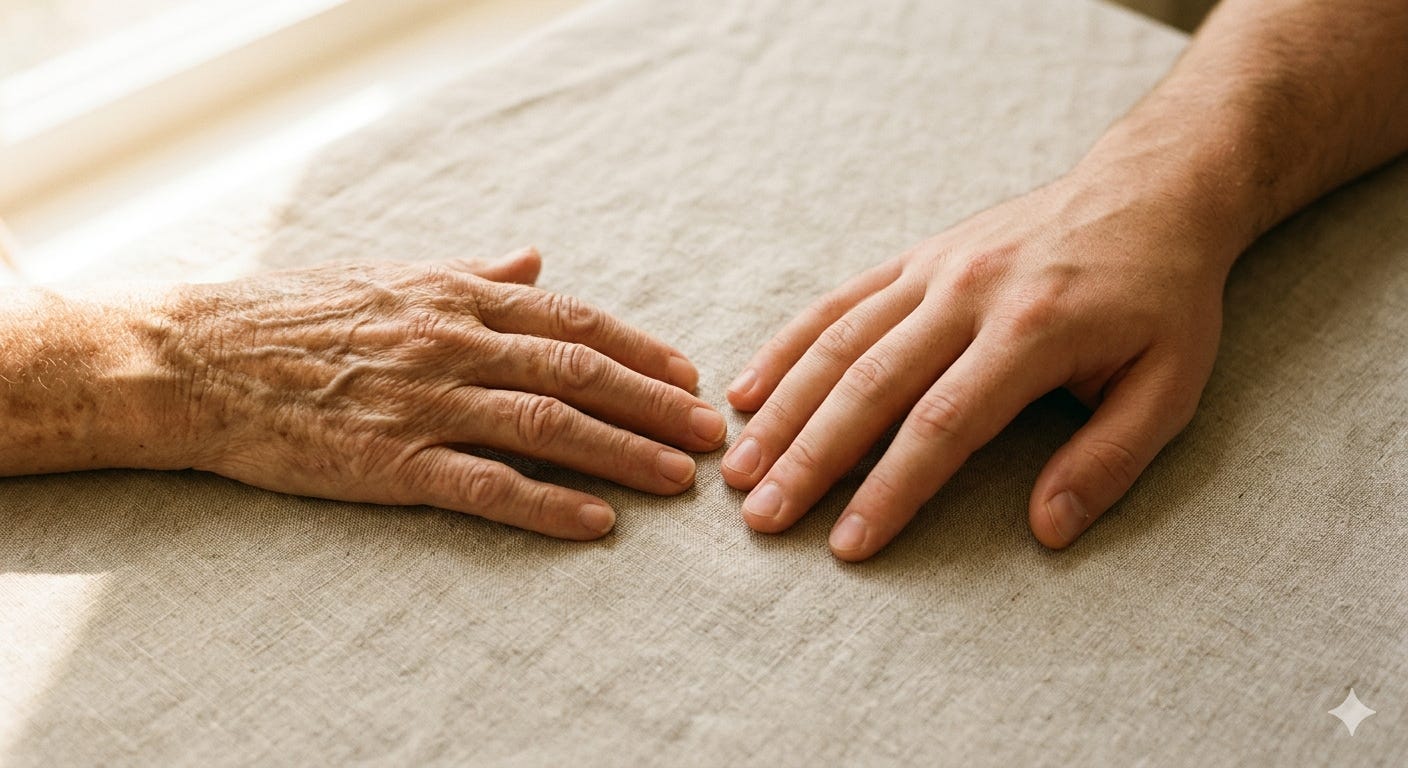
The word comes from Latin. Juxta — meaning near. To juxtapose something is to place it next to something else. Not opposite. Near. Close enough that the contrast becomes visible. Close enough that you can’t look at one without seeing the other.
That’s a completely different thing.
Opposites are easy to see. Nobody misses the dramatic contrast. But nearness - that’s subtler. That’s two things sitting side by side, quietly rubbing against each other, until something true emerges from the friction.
A funeral mourner telling jokes graveside. That’s not the opposite of grief. It’s grief and humor, placed so close together you can feel both at once.
That’s juxtaposition.
And that’s exactly what this blog is about.
Not the dramatic contrast between AI believers and AI sceptics. Not technology versus humanity, progress versus caution, future versus past.
It’s the quieter thing. The thing that lives in the nearness.
I want to do this — placed right next to — here’s what’s stopping me.
Those two things, side by side. Close enough to touch. Close enough that you can feel the friction between them.
That’s the juxtaposition I’m looking for in every post I write. Not the grand opposition. The small, true nearness. The moment where what you want and what’s blocking you are sitting so close together that you can finally see them both clearly.
And once you can see them both clearly — that’s when something shifts.
That’s why this blog is called juxtaConversation.
Not because I’m putting opposites in a ring together.
Because I’m placing things near each other. And letting you feel what happens when they touch.
Sandi is a Melbourne-based problem-solver, crisis-averter, and translator of the technical into the human. She spent decades being the person everyone called when something was broken, confusing, or just needed explaining properly — earning a reputation that preceded her wherever she went. Now she’s channelling that same instinct into AI: making it accessible, practical, and genuinely useful for people who think it isn’t for them.