

Let me tell you about the story we tell about people who arrive late.
It goes like this: the early adopters were brave. They jumped in when the technology was rough and the outcomes were uncertain and nobody quite knew what it was going to become. They experimented and failed and tried again and got ahead of the curve. And now the curve has moved on, and anyone arriving now is behind it. Catching up. Making do with whatever the early adopters left at the table.
It’s a compelling story. It has the satisfying shape of a race with clear winners and losers.
It’s also, in my experience, largely nonsense.
What early adoption actually looked like
I watched it happen. The wave of people who jumped on AI tools in 2022 and 2023, when the technology was new enough to feel like a novelty and accessible enough to try without much friction.
Social media filled up overnight. AI-generated portraits in the style of Renaissance painters. Pets reimagined as characters from animated films. Faces transformed into a dozen different aesthetics, shared and shared and shared until the feed was nothing but variations on the same handful of filters.
It was fun. I’m not dismissing it. Novelty has its own legitimate pleasure.
But most of it evaporated. The portraits got boring. The filters got old. The people who’d generated a thousand AI images in a month moved on to the next thing, and what they left behind was mostly a vague memory of a moment that felt significant and turned out to be decorative.
That was early adoption for a lot of people. Volume without depth. Experimentation without direction. The experience of touching something new before knowing what you wanted to do with it.
I watched all of this and felt — not left behind. Underwhelmed.
Why I waited
I want to be honest about this, because it wasn’t entirely principled.
Part of it was wariness — the cultural residue of forty years of films about machines that turn, absorbed so thoroughly it felt like common sense. Part of it was the particular snobbery of someone who does words for a living watching AI generate text and finding it hollow. Part of it was just busyness, and the sense that there would always be time later.
But underneath all of those reasons — some more flattering than others — there was something that turned out to be right, even if I didn’t know it at the time.
I was waiting for a reason.
Not a novelty. Not a filter. Not the experience of touching something new for the sake of touching it. A genuine problem I needed to solve, or a genuine question I needed to think through, or a genuine project I needed help building. Something that would give the technology something real to work with, and give me something real to evaluate it against.
That reason arrived. And when it did, I sat down and had a conversation that changed how I worked, how I thought, and eventually — unexpectedly — what I believed was possible for me.
Not because I was finally brave enough to try. Because I finally had something worth trying it for.
What lateness actually costs
I want to be fair to the other side of this argument, because there is one.
Waiting has costs. The skills compound — the people who’ve been using these tools for two years are genuinely more fluent than I am, and fluency matters. There are things they can do in thirty seconds that still take me five minutes. That gap is real and it doesn’t close by itself.
And some doors do close. Some early advantages in specific industries and roles have already been claimed by people who moved faster. Not everything waits for the considered arrival.
So I’m not saying lateness is always fine. I’m saying it’s not always failure.
The question worth asking isn’t why didn’t I start sooner? It’s now that I’ve started, what am I doing with it?
Because the tortoise wasn’t wrong. The tortoise just needed to actually run.

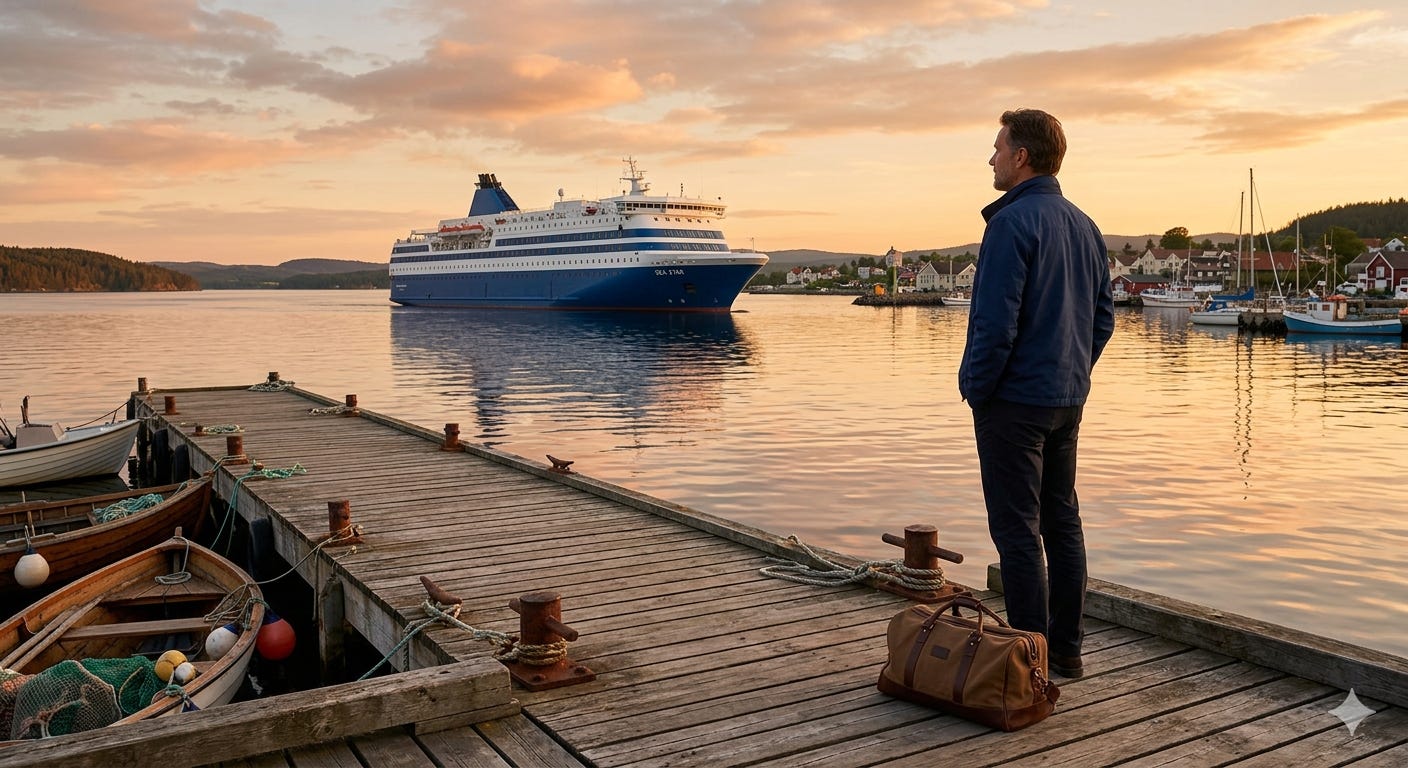
The boat I was waiting for
Here’s what I know about the boat I eventually boarded.
It was going somewhere I actually wanted to go. I wasn’t on it for the experience of being on a boat — I was on it because I had a destination, and the conversation I was having was helping me get there. The apps I was building were real. The blog I was developing was mine. The thinking I was doing was sharper for having someone to think with.
The people who got on the first available boat in 2022 had an experience. I had a different one. Neither of us is wrong.
But I’d rather arrive somewhere deliberately than wash up somewhere accidentally, even if the deliberate arrival took longer.
What I’d say to the person still on the dock
You haven’t missed it. The boat you’re watching leave isn’t the only one.
What matters isn’t when you start. It’s what you bring when you do — the real problem, the genuine question, the actual situation you need help with. That’s what makes the difference between a conversation that produces something and one that produces a Renaissance portrait you’ll share once and forget.
The dock is fine for a while. But there comes a point where watching departures is no longer research — it’s just delay wearing a more respectable name.
You’ll know when that point arrives. It usually feels like the moment you stop finding reasons to wait and start finding reasons to go.
When it does — the conversation is ready. It’s been ready for a while.
It was just waiting for you to have something worth saying.
Sandi is a Melbourne-based problem-solver, crisis-averter, and translator of the technical into the human. She spent decades being the person everyone called when something was broken, confusing, or just needed explaining properly — earning a reputation that preceded her wherever she went. Now she’s channelling that same instinct into AI: making it accessible, practical, and genuinely useful for people who think it isn’t for them.