

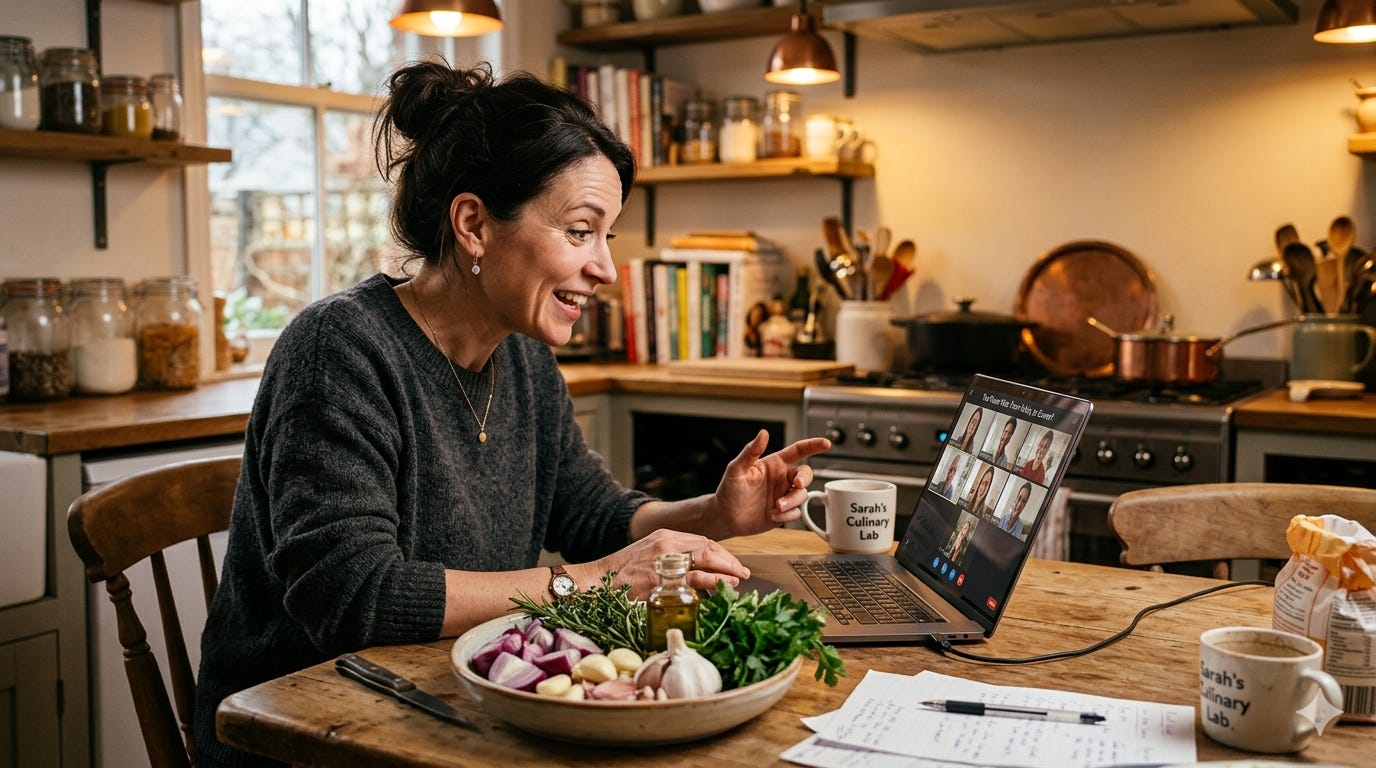
I have a pantry problem.
Not a dramatic one. Not the kind that makes it onto lifestyle blogs or features in organisational psychology papers. Just the ordinary, recurring, mildly maddening problem of standing in front of a reasonably well-stocked kitchen and having absolutely no idea what to make with what’s already there. Ingredients that don’t obviously belong together. Half-used packets of things purchased for a specific recipe, now living out their days at the back of a shelf. The eternal question: what can I actually make with this?
It’s not a big problem. But it’s a real one. And it turns out that real problems, however small, are exactly where things begin.
I’d been using AI for a while by then. Experimenting, wandering, trying things — you’ve read that story, or you’re about to. I knew what a prompt was. I knew how to have a conversation with Claude that went somewhere useful. What I didn’t know yet was what I was capable of building. What I didn’t know yet was that building and knowing were, for me, about to become the same thing.
I described my pantry. I described my problem. I asked for help.
And then something happened that I wasn’t expecting.
The app appeared.
Not all at once. Not with a sprint plan or a Jira board or a proper project brief — the kind of documentation I’d spent decades producing for other people’s projects, translating what they wanted into language a developer could act on. There was none of that. There was just a conversation. A back and forth. A clarification here, a refinement there, a moment where I said that’s not quite right and something better arrived almost immediately.
It was iterative. It was responsive. It was, if I’m being honest, exactly how I had always imagined software development could work — if only the developer on the other end could keep up.
This one could.
I need to tell you something about what it means to be a BA.
A Business Analyst spends her career in the space between. Between what people want and what gets built. Between the language of the business and the language of the technology. Between the person with the problem and the person with the solution. You become fluent in both dialects without ever quite belonging to either. You learn to translate — to take the messy, human, sometimes contradictory thing that someone needs and turn it into something a developer can act on. You get very good at knowing what’s possible. You get very good at knowing what people actually mean when they say what they want.
What you don’t get to do, generally, is build it yourself.
That’s not bitterness. That’s just the shape of the role. You’re the bridge. Not the destination. You hand the brief across and you wait to see what comes back, and sometimes what comes back is exactly right and sometimes it isn’t, and either way it was built by someone else, with your words as the blueprint.
I had been the bridge for decades.
And then, in a conversation about pantry ingredients and weeknight dinners, I was on both sides of it simultaneously.
I was writing the brief and watching it become the thing. I was saying what I need is this and seeing this appear, adjustable, functional, mine. I was the BA and the client and, in some way I’m still finding words for, the developer — not because I wrote a line of code, but because the conversation between what I needed and what got built had, for the first time, no gap in it.
There was no telephone game. No translation layer. No handing across and waiting. Just the thing I needed, arriving from the thing I said, in the time it takes to have a conversation.
I sat with that for a moment.
But I’m getting ahead of myself. Because before I tell you about the moment the app appeared, I need to tell you about the months that came before it.
The months of circling. Of trying things that went nowhere. Of the quiet, stubborn, slightly embarrassing conviction that I could do this — that Peter Diamandis was right, that maybe everyone truly could become an entrepreneur, or at very least become more able — and the equally stubborn inability to find the proof of it. I’d watched his content. I’d nodded along. I’d felt the pull of it, the possibility of it, and then I’d gone back to my experiments and my failures and my deposits, collecting them without knowing what they were for.
I wanted to believe it. I just couldn’t yet find the evidence in my own life.
The evidence was coming. I didn’t know that then.
So. The pantry conversation.
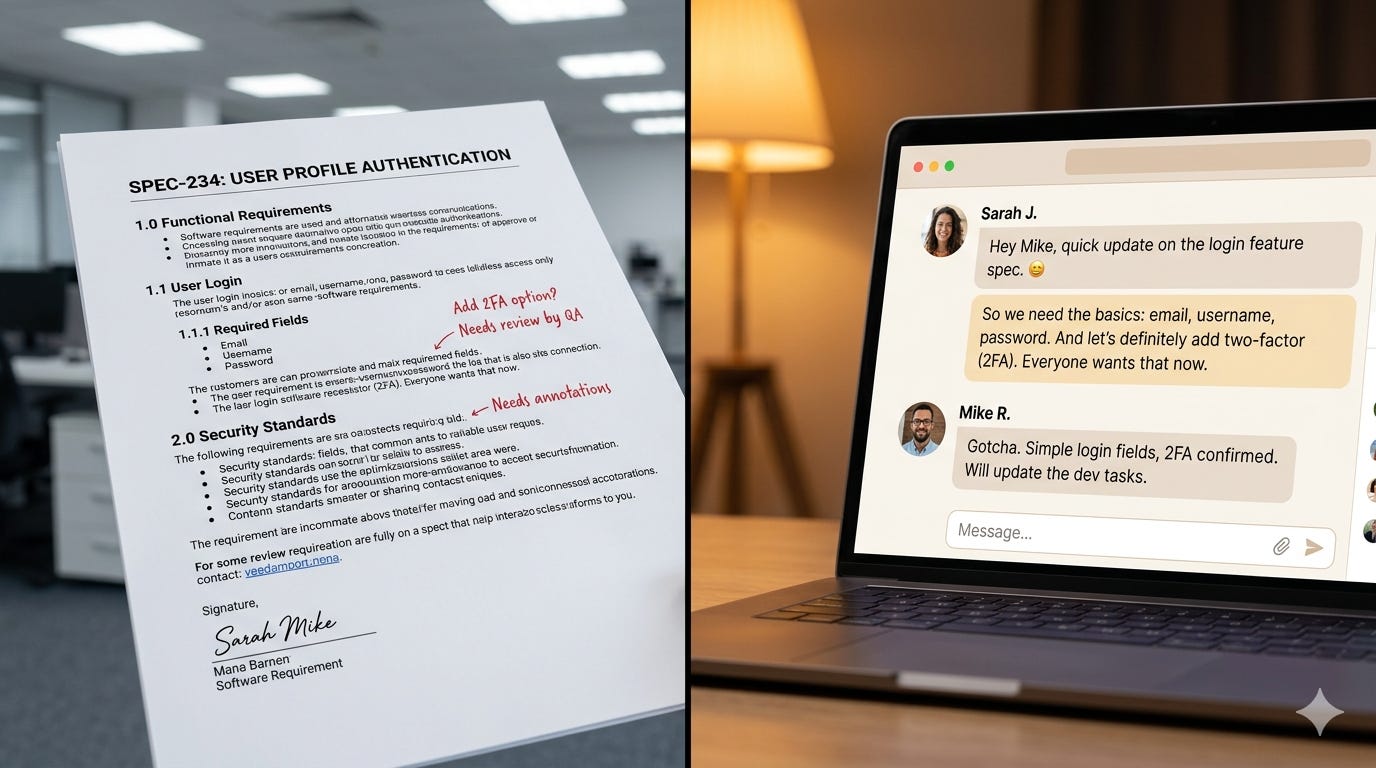
I described what I needed. We talked it through. I asked questions, refined the brief, pushed back on a couple of things, said yes to others — doing, without thinking about it, exactly what I had always done professionally. And then came the moment I had not prepared myself for.
I said: go ahead and build it.
And Claude built it.
Not tomorrow. Not after a sprint. Not after a requirements sign-off process and a development cycle and a UAT phase and a go-live checklist. Right then. In the time it takes to make a cup of tea. I watched it appear on my screen — functional, structured, doing the thing I’d described — and I felt something move through me that I can only describe as the physical sensation of a belief becoming a fact.
I had been telling myself for months that this was possible. That there was something here for me. That the certainty I felt, however directionless, was pointing at something real.
And there it was. On my screen. Sixty seconds after I said go.
I won’t tell you exactly what I said out loud in that moment. It wasn’t elegant. It wasn’t the kind of thing you’d put in a blog post. But it was honest, and it was loud, and it was the sound of months of not-quite-knowing collapsing into a single point of absolute clarity.
Oh. I can do this.
RecipeMatcher is not a complicated app. I want to be clear about that. It does one thing: it takes what you have and tells you what you can make. It’s not going to win awards. It’s not going to disrupt an industry. It is useful, specific, and completely mine — built for my problem, shaped by my needs, refined through my feedback until it worked the way I wanted it to work.
That’s the thing that mattered. Not the app itself. The fact that I could build it.
Because here’s what I know about myself after decades of professional life: I have always known what I wanted. I have always been able to describe it clearly, to articulate requirements, to spot the gap between what was built and what was needed. That skill didn’t come from nowhere. It was earned, carefully, over a long career of being the person who made things make sense.
What I didn’t know was that the same skill that made me good at my job would make me capable of this.
The BA’s entire professional value is in the translation. In knowing both sides of the conversation well enough to carry meaning across the gap. And AI didn’t make that skill redundant — it made it the skill. The ability to describe what you need clearly, to iterate on what comes back, to know when it’s right and when it isn’t — that’s not a technical skill. That’s a human one. It’s the skill I’d been practicing without knowing it had this application.
I wasn’t a late adopter who finally found a use case.
I was a person whose entire professional life had been preparation for exactly this kind of conversation.
I just hadn’t known that until the conversation happened.
And Peter Diamandis? I think he’s right. Not in the way that sounds frightening or impossible or naively optimistic to the person in the comment section who watched the whole thing and still couldn’t find themselves in it. Right in a quieter, more specific, more ordinary way. Right in the way that says: the tools are here, and the skill you already have is closer to what’s needed than you think, and the only thing standing between you and finding that out is the decision to begin.
RecipeMatcher was the first thing I built. It wasn’t the last. But it was the one that changed what I thought was possible — not for AI in general, not in the abstract, but for me specifically. For this person, with this background, with this particular set of skills that had always been pointed at someone else’s problems and could now, finally, be pointed at my own.
That’s the moment the wandering ended.
Not with a fanfare. Not with a dramatic realisation. With a pantry app. With the quiet, slightly surreal experience of watching something real take shape from nothing, in a conversation, on an ordinary evening.
With the discovery that the builder I’d been looking for had been available all along.
I just needed something to build.
Sandi is a Melbourne-based problem-solver, crisis-averter, and translator of the technical into the human. She spent decades being the person everyone called when something was broken, confusing, or just needed explaining properly — earning a reputation that preceded her wherever she went. Now she’s channelling that same instinct into AI: making it accessible, practical, and genuinely useful for people who think it isn’t for them.